


Short Video: The new “gold mine” of the global entertainment industry
15:24 01/10/2025
Thanh Niên Việt - Spreading from China to the world, ultra short films are creating an unprecedented craze in the content industry.
With runtimes under three minutes, vertical “mini dramas” not only sweep through youth audiences, they also open a market worth tens of billions of dollars, raising big questions for traditional entertainment models.
From social media fad to a billion-dollar industry
At first, ultra short films were a playground for web-drama producers and KOLs. Seeing the market’s huge potential, professional producers and even A-list stars joined in. Notable names include Kuaishou, Bilibili, Tencent Holdings, DramaBox, ShortTV, GoodShort, FlexTV, Douyin. The participation of big stars makes short films more attractive, drawing ad sponsorships and in-app pay models. Many titles squeeze into prime time, competing with TV series and theatrical films. In 2024 alone, according to film-industry tracker iMedia Research, China produced more than 30,000 short films, with total revenue estimated at 50.4 billion yuan (186,000 billion VND). For the first time, revenue from this format surpassed the 42.5 billion yuan (over 154,674 billion VND) from China’s box office.

Fierce competition is pushing ultra short films to become higher quality, while opening new paths and impressive growth prospects for players who can move fast and innovate.
Two major video platforms, Douyin and Kuaishou, have pioneered AI-created films, from scripting to acting. The technology shortens timelines and cuts costs, creating a new wave in China’s entertainment sector.
Not stopping at localization, pioneers such as ReelShort and DramaBox are producing original content with foreign actors, writers, and directors. The strategy shows instant results. Even if only the first few episodes are free, viewers are willing to pay to watch the full series. Some bundles cost up to 10 USD for 60 episodes, on par with a month of Netflix, yet viewers still pay. This helped ultra short film apps hit a staggering 370 million downloads worldwide in Q1 2025, six times last year.
Rapid growth also sets the stage for the market to “self-filter,” pushing producers to raise content quality. Many companies focus on better scripts and post-production. Localities are introducing incentives for the short film industry. For example, Guangdong province encourages producers to use advanced technology to make smart films for overseas audiences. With rich traditional culture and intangible heritage, the province aims to leverage short films to promote local culture and elevate its image with international viewers.
The short film fever across platforms is not only entertaining, it also opens a highly effective marketing channel. From everyday consumer brands and cosmetics to fashion labels, marketers quickly “catch the trend,” weaving products into plot points naturally, without feeling forced. Notably, many ultra short episodes have become promotional tools for China’s modern medical services. It is not hard to find plots where a character suffers a serious illness, even cancer, then is “saved” thanks to cutting edge AI medical devices developed in China. Experts say this mirrors South Korea’s playbook. Through Hallyu and K-pop, Korea spread culture worldwide and indirectly promoted electronics, fashion, and cosmetics. Now, China’s ultra short films are becoming a gateway to export domestic products and services through the power of popular culture.
Ultra fast production, ultra efficient profits
Growth is not only in volume, the format impresses with superior economics. Thanks to ultra fast production, seven to ten days to shoot, three months to release, producers can quickly test and optimize monetization models.
A typical example is “The Divorced Billionaire Heiress.” Production cost was under 200,000 USD, yet it earned more than 35 million USD in North America. That return is something any traditional studio would dream of.
Viewers are also willing to pay. The freemium model, a few episodes free, pay to unlock the rest, is proving effective. A 60-episode pack at 10 USD may seem small, but multiplied by millions of users, profits add up. In Q1 2025, ultra short film apps reached 370 million global downloads, six times the same period last year.
A full evolution, from “amateur” to mainstream industry
What began as a space for small creators is now attracting more A-list stars and professional studios. Competition drives content quality up sharply, with AI applied to scripting, production, and even performance, lowering costs, shortening timelines, and opening an entirely new path.
Platforms like ReelShort and DramaBox are scaling globally by producing original content in overseas markets with international casts, showing that the format’s “globalization” is not a vision of the future, it is already happening.
Beyond entertainment value, short video is seen as a promising new marketing channel. Products from fashion and cosmetics to medical services are embedded skillfully in storylines, similar to how South Korea succeeded with the Hallyu wave.
Vietnam is not standing aside: YeaH1 pioneers the digital gold mine
In step with the global trend, Vietnam’s market is seeing energetic participation from domestic players, notably YeaH1 Group.

“Nàng Kiều lỡ bước 2” proves the pull of short films, drawing 150 million views.
The group not only owns “premium content” projects such as Anh Trai Vượt Ngàn Chông Gai, Chị Đẹp Đạp Gió, Gia Đình Haha, it also leads in ultra short films with social-media hits like Dâu Hào Môn, Mẹ Lao Công Học Yêu, Dỗ Dành Vợ Yêu, Nàng Kiều Lỡ Bước, and recently Dẫn Dụ Em Vào Lòng.
“Dẫn Dụ Em Vào Lòng” enters the Top 3 hottest film topics on social media
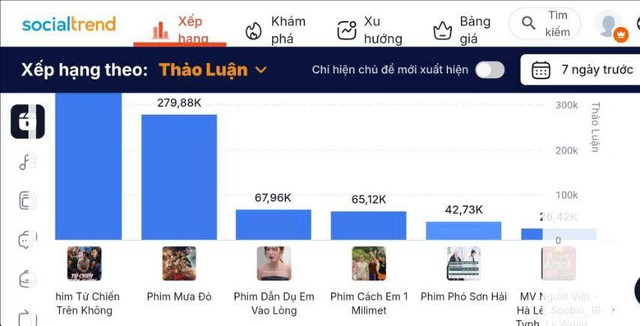
Episodes on the Yeah1Short channel have drawn hundreds of thousands of views each. Notably, Dẫn dụ em vào lòng climbed to third place among the most discussed films on social media, just behind the two block busters Mưa đỏ and Tử chiến trên không.
According to Nguyễn Quế Tiên, Chief Operating Officer of YeaH1 Digital Content and Deputy Director of MangoPlus, the success of ultra short films comes from a “golden formula”: short, fast, dramatic. She emphasized, “We are living in a world where time is gold and the phone screen is the cinema. Whoever captures this habit, wins.”

Nguyễn Quế Tiên, COO of YeaH1 Digital Content and Deputy Director of MangoPlus
The future of entertainment, who will lead
The boom in short video films offers big opportunities for first movers, and it is a wake-up call for traditional giants if they do not adapt in time.
In an era where users “watch fast and forget fast,” the biggest challenge is not only producing fast enough, it is creating something new enough to hook emotions in the first few dozen seconds.
As the smartphone becomes a personal cinema and every minute becomes a content arena, it is clear that ultra short films are not the future, they are the present.
Bài viết mới
Xem tất cả bài viết
Tin tức báo chí
'Anh Trai Vượt Ngàn Chông Gai': Bản sắc văn hóa dân gian bừng sáng rực rỡ
Vietnamplus - Thế hệ trước giữ lấy ký ức văn hóa, truyền lại ngọn lửa di sản - thế hệ sau tiếp nhận, chắt lọc và chuyển hóa bằng tư duy đương đại. Nhờ đó, dòng chảy văn hóa chưa bao giờ bị đứt gãy.

Tin tức báo chí
Từ xa lạ thành một mái nhà chung: Điều đẹp nhất ở "Anh Trai Vượt Ngàn Chông Gai 2026"
Báo Thể Thao & Văn Hóa - Càng theo dõi hành trình, khán giả càng nhận ra chương trình không chỉ có những màn trình diễn mà còn là cách những người đàn ông ấy dần trở thành anh em của nhau.

Tin tức báo chí
“Anh Trai Vượt Ngàn Chông Gai 2026”: Nhà Nguyên Tố mở màn ấn tượng, giành lợi thế tại Công diễn 3
HHTO - Mở màn vòng Truy kích Công diễn 3, Nhà Nguyên Tố gây ấn tượng với "We Win This Game" và sân khấu mang đậm màu sắc tuổi thơ. Số điểm 2.290 giúp cả nhóm nắm lợi thế trong cuộc đua mới.