
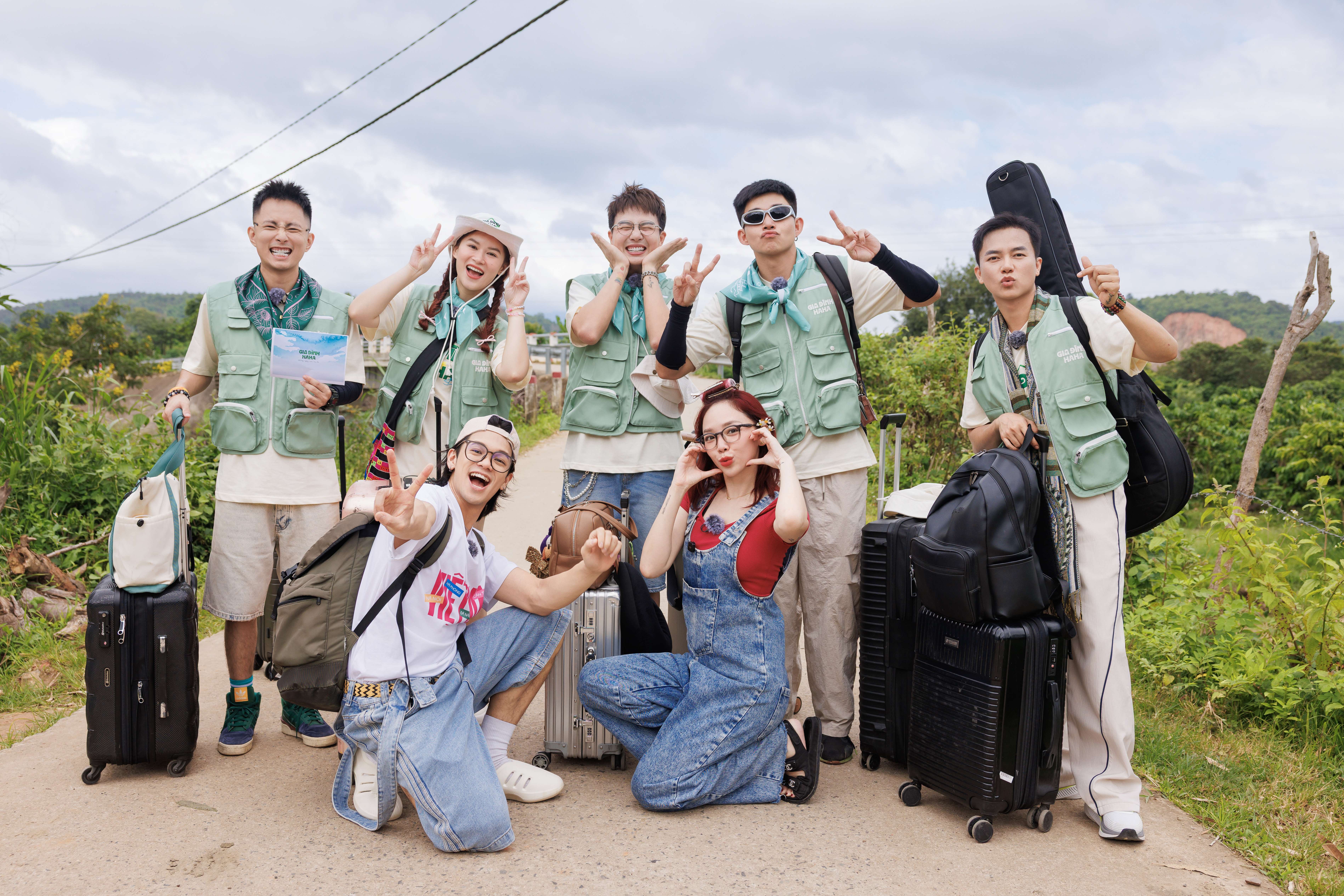
"Gia Dinh Haha" episode 12: The central highlands where elephants are family members
17:07 29/08/2025
Saying goodbye to the charming Mekong Delta, “Gia Dinh Haha” continues its journey into the vast, majestic Central Highlands home to red basalt soil as beautiful “as in a fairy tale.”
In Đắk Lắk, the hometown of Ba Nam, the family begins days of exploring the Êđê - M’nông world, where every house, every fire, and every song carries a living cultural lineage.
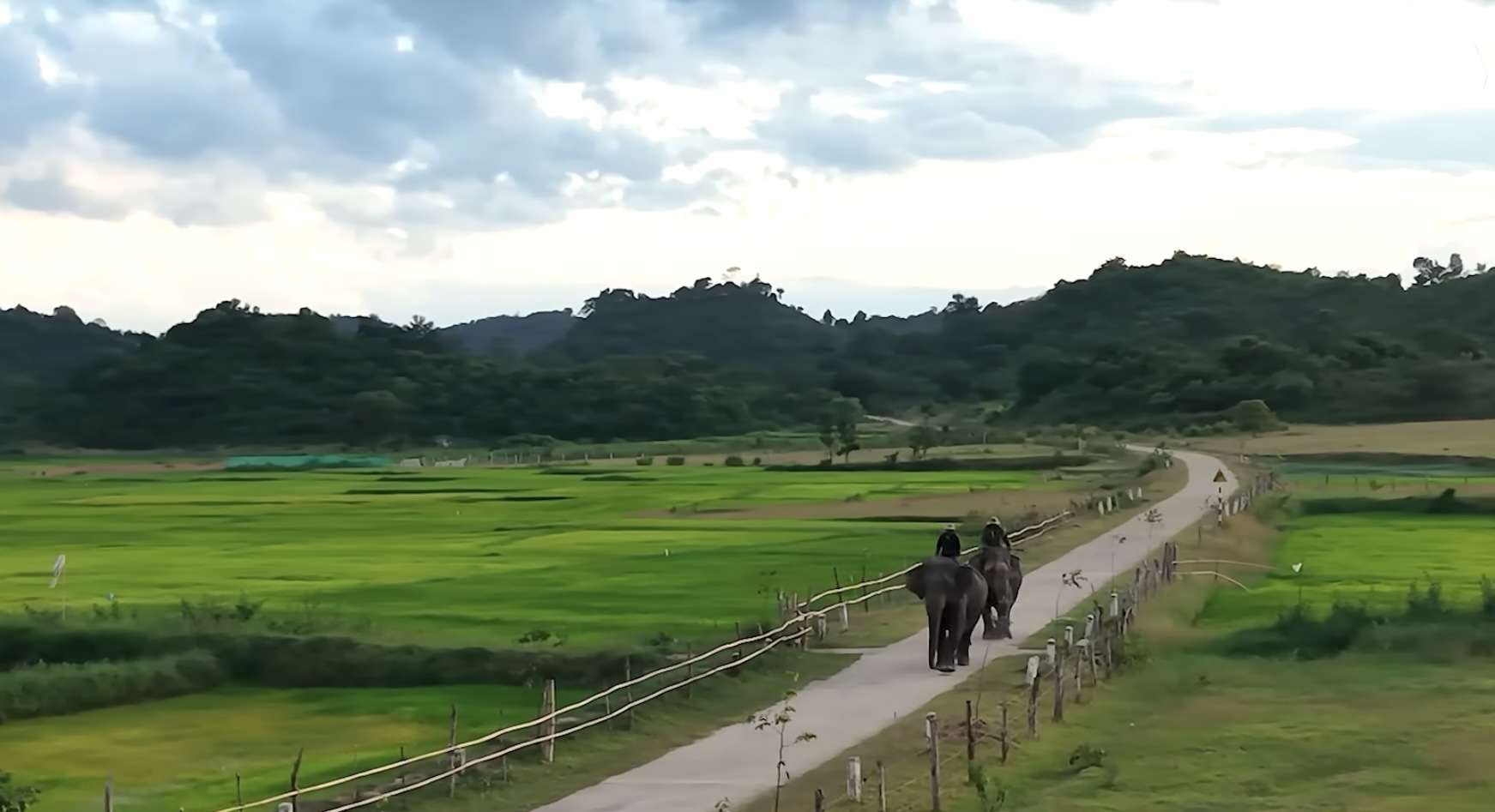
The majestic beauty of the Central Highlands
A “fairy-tale” gateway into M’nông - Êđê life
The Central Highlands open a new, wonder-filled chapter: winding red-dirt roads along the hills, elephants walking slowly, sunlight glittering on the lake, and herds of buffalo grazing on fresh grass. This time, “Gia Dinh Haha” is joined by two guests Chi Dep Tóc Tiên and Anh Tai (S)TRONG exploring the next stop at the invitation of a local M’nông villager: “Please visit my home. I am Y Xim N-du.”
Their new home is a spacious, well-kept traditional stilt house, leaning against green hills and facing a stream, with wind chimes at the gate the “phong linh” typical of local homes. Houses here often have two stairways: one wide stair for daily use, and one traditional stair carved with two mother’s breasts at the top symbolizing motherhood. The traditional stair is for the women of the house, and honored guests are invited “Gia Dinh Haha” to use it too. When stepping up, guests touch the carved breasts with both hands to express gratitude, as everyone is nurtured by a mother’s milk.
This land follows a matrilineal system, where women hold important roles in family and society. A small detail that reveals a whole worldview of unique customs leaving the members in awe at first hearing.
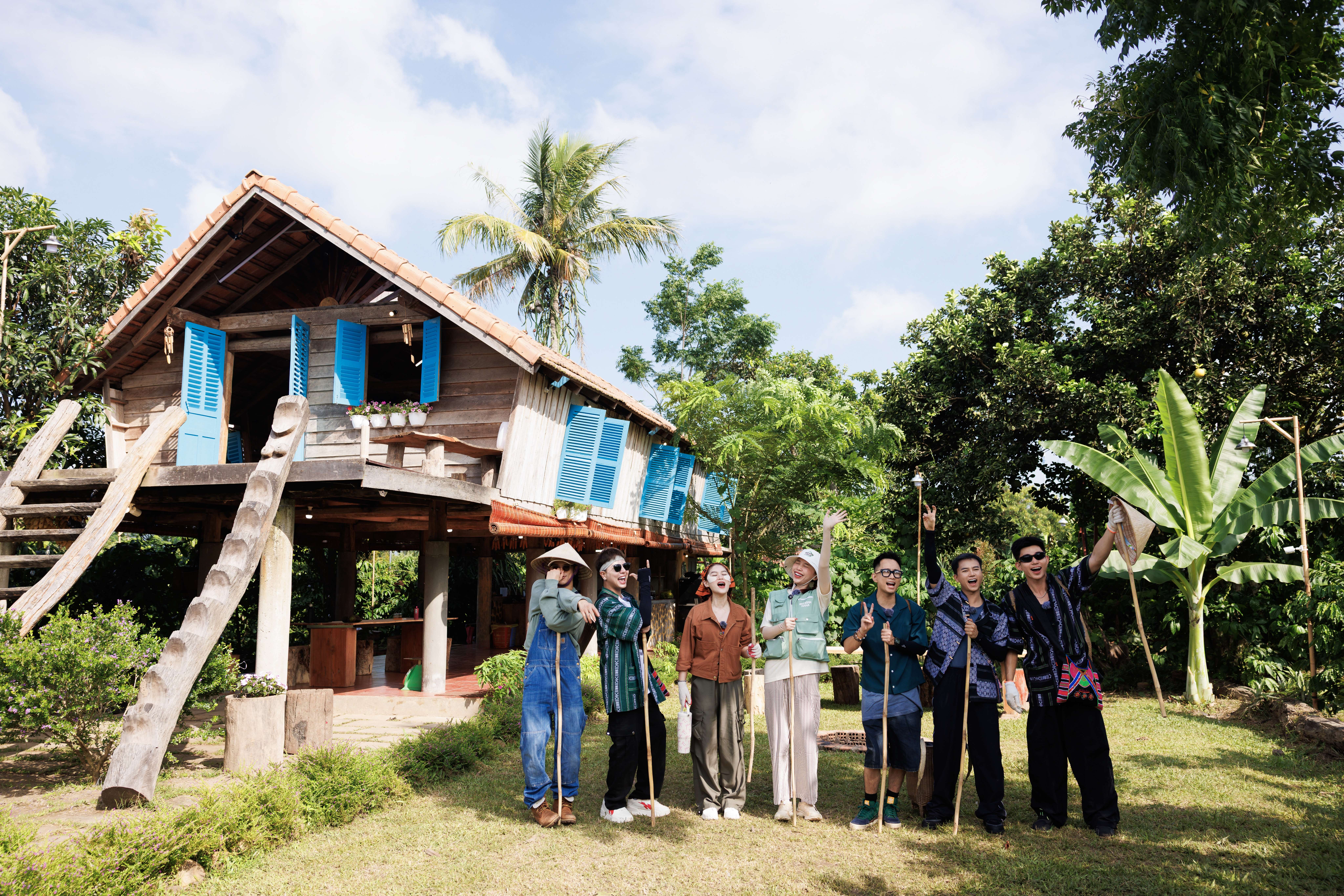
(“Gia Dinh Haha” members check in in front of Xim’s stilt house.)
Every detail in the house reflects local custom, such as building along a north–south axis to welcome sunlight, with the entrance from the east. The Êđê believe this is the direction of life and vital energy: “Mountains above, rivers below, land for farming, a home in peace.” From here, the Central Highlands journey is not just a trip it is an invitation for viewers to explore, feel, and honor the sustainable values of a people living in the great forest.
Music the “specialty” of “Gia Dinh Haha” in every workday
If the Mekong Delta chapter was tied to calm canals and leaning coconut rows, the Central Highlands are defined by red-basalt slopes, endless fruit trees, and an energetic rhythm of life.
The group is tasked with harvesting avocados and limes two specialties of the plateau. Juicy, glossy-green limes symbolize freshness and abundant life here. Under the harsh sun, everyone gets muddy as they roll up their sleeves to work the soil and plant corn. Each person takes a role, moving in sync, creating a steady, generous work rhythm in the spirit of the Central Highlands.
One of “Gia Dinh Haha”’s signatures everywhere is music. When (S)TRONG and Tóc Tiên burst into song and dance a “cha cha cha” in the cornfield, the cheerful melody and laughter make the field come alive. True to the show’s “farming” spirit, no matter where they go or what they do, the workday is always filled with joy.
Family love the “most Vietnamese feeling” for those far from home
During a visit from Xim’s parents, the warmth and hospitality of the Central Highlands spread. There is a tradition that whenever guests come, everyone stops by to greet them showing the open-hearted spirit of the people here.
Amid the great forest, two expatriates Bùi Công Nam and (S)TRONG share childhood memories, their love of music, and moving stories about family, deepening the longing to return home and find the warmth of family again. Nam opens up about his path in music. As a young man, he had one dream: to live on his music. He spent years singing in cafés and at weddings, learning step by step from seniors. Along the way, he found an idol (S)TRONG, who once shone on Vietnam Idol. Nam recalls how in every episode, (S)TRONG’s father was there to support and cheer him on.
(S)TRONG speaks of deep family love: “The most Vietnamese thing in me is family love. I love my family so much. They always support everything I do.” Though his father has passed, he believes his father still watches over him. Every year, he returns home to stand where his father rests and remember him. He believes that, in some way, his father still follows and protects him. The moment the two look up and call out, “Hello Dad” “Hello Uncle” feels like a firm belief that the love of previous generations never disappears it transforms, always there to shelter the children of the family.
Many viewers left emotional comments about this talk: “A conversation between two beautiful souls,” and messages to encourage: “Hiếu, your father is very proud of you a good son with a pure soul who lives and works with a ‘pure soul.’”
(Ba Nam and (S)TRONG share stories about family, work, and their passion for music.)
Discovering matrilineal culture: “One life, three names”
Dinner with the M’nông family is warm and cozy, with traditional dishes like canh vếch bò and rượu cần. Rượu cần (jar wine) is the pride of the M’nông. It is made with traditional starter and fermented with wild galangal, creating a rich, distinctive Central Highlands flavor. In the matrilineal custom, the woman drinks first through the straw.
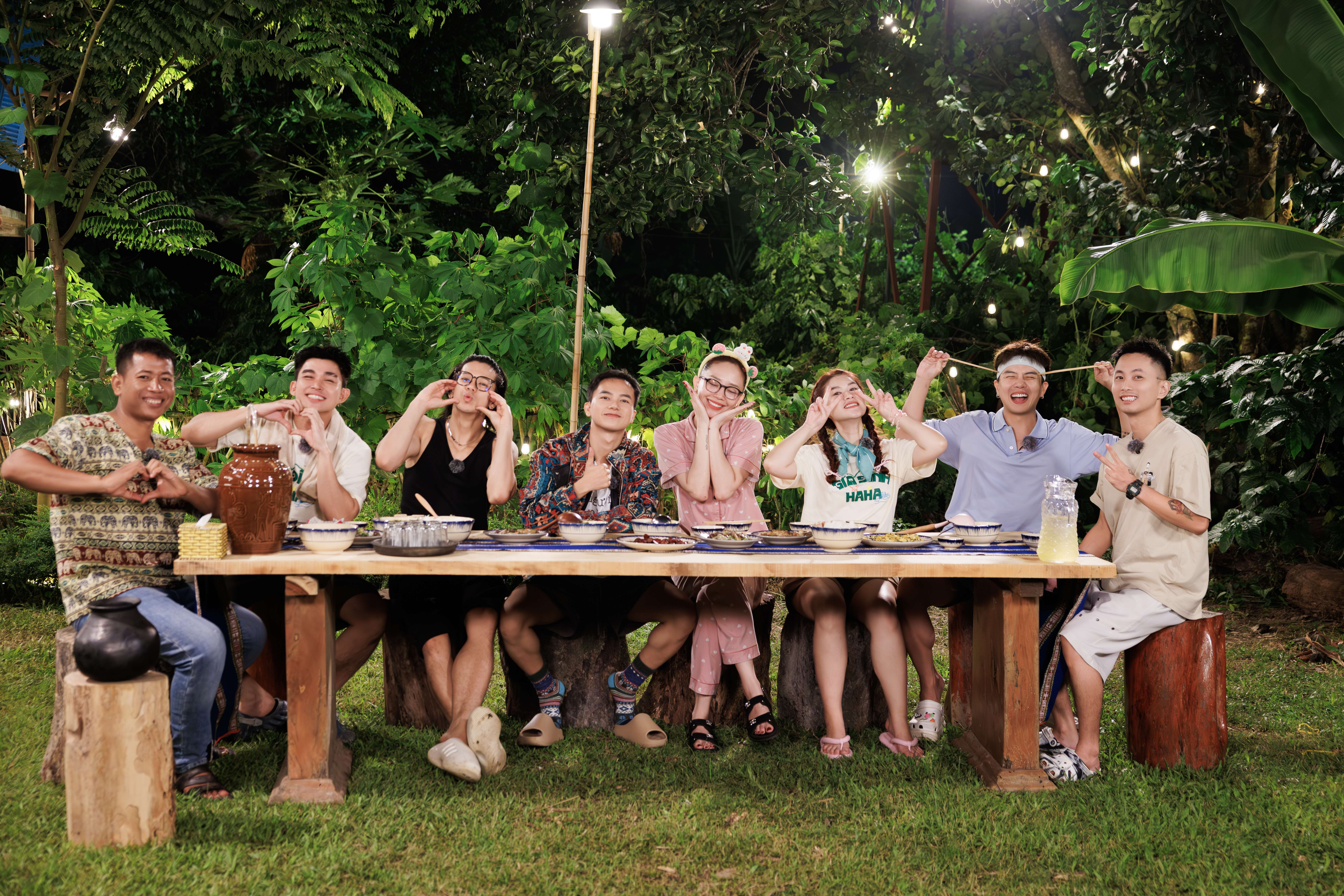
(The whole family enjoys traditional rượu cần.)
During the conversation, Xim explains how M’nông names work: besides one’s given name, after having a first child, a person is called by the child’s name; similarly, after having a first grandchild, they are called by the grandchild’s name. People joke that “one life here brings three names.”
According to M’nông naming tradition, at the first-birthday ceremony (also the Naming Ceremony), cups of rượu cần are placed around; the baby crawls to a cup, and the name is chosen from it. In the past, names were often taken from rivers, streams, or deities, with the hope that the child would be blessed and protected. In this matrilineal land, children also take the mother’s family name.
M’nông cultural heritage: Elephants are more than symbols
Xim also shares about the domestic elephants cared for here beings closely tied to the Central Highlands. Elephants are intelligent and friendly, and they bond with people.
Locals do not see elephants as “vehicles” or “property.” They call them gio meaning grandparents like a family member. If an elephant passes away, a solemn farewell is held, like bidding goodbye to a loved one. This shows a bond that has lasted for hundreds of years between the indigenous people and elephants. Interestingly, the region’s matrilineal culture is reflected in elephant herds: the leading elephant is often female just as women head the family, mirroring community beliefs.
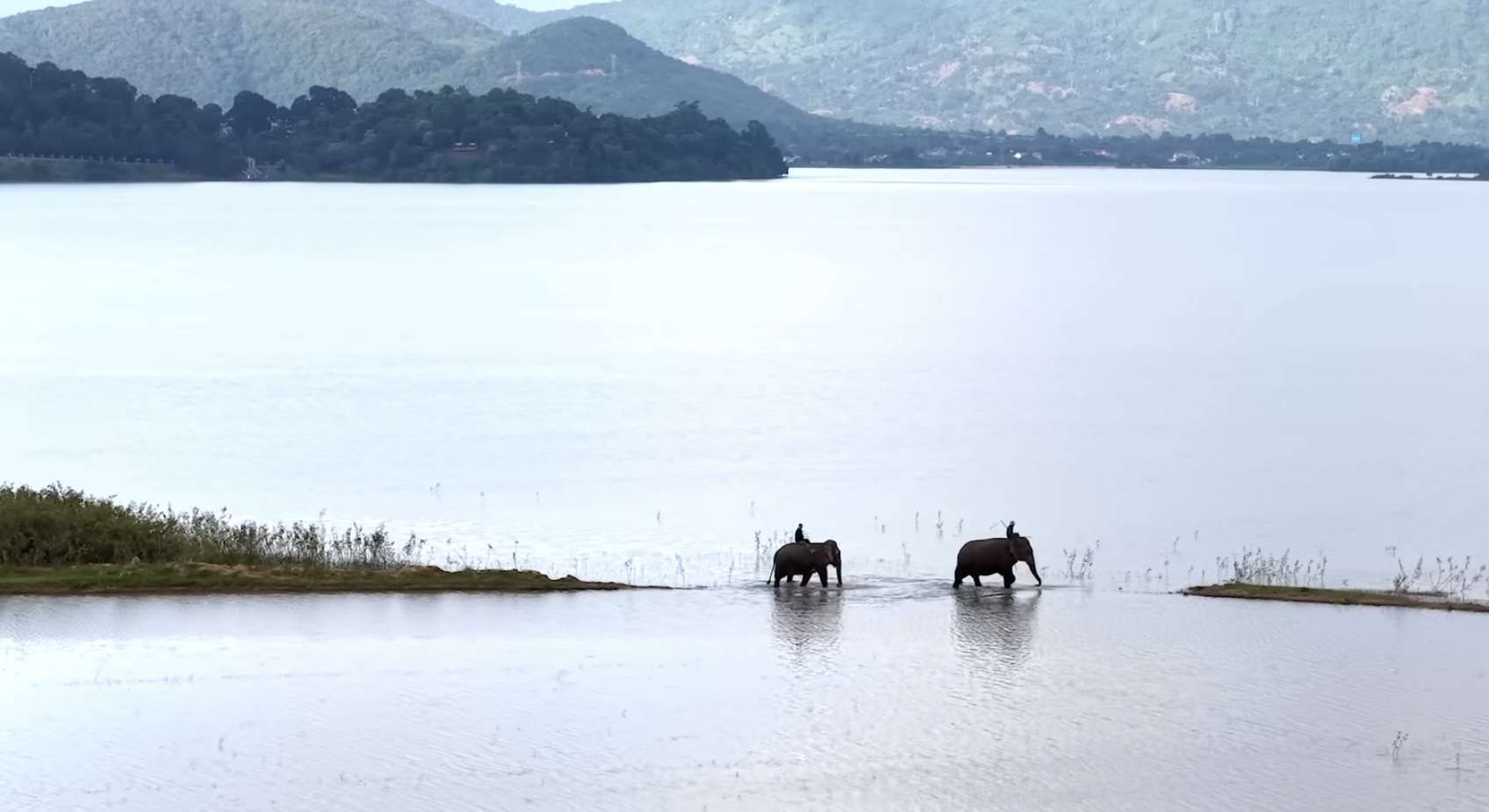
(Elephants are family members.)
In reality, Đắk Lắk has only about 33 domestic elephants left; in Xim’s village, there are just 9. Each elephant is priceless, loved and cared for like a treasure. Throughout the journey, Xim shares precious “folk knowledge” passed down from elders: using dried elephant dung as fertilizer; using forest leaves to soothe stomach aches or dress wounds. Each plant comes with a story some named after someone who accidentally ate it and was poisoned, so later generations would avoid it; a waterfall named for someone who sadly died there, as remembrance. For the people of the Central Highlands, nature is not only a refuge but also a storehouse of life knowledge refined over generations.
Where elephants once appeared in parades, carried tourists, or performed, the goal now is to return them to the forest so visitors observe them only in nature. This is a more respectful approach to tourism and an effort to protect elephants, restore a shrinking population, and build a sustainable path for the region. These stories inspire everyone to feel more responsible for safeguarding the cultural and natural heritage of the Central Highlands.
“Gia Dinh Haha” cast scores a “double win” in the “Stop Riding Elephants - Let Elephants Return to the Forest” contest
The spirit of protecting domestic elephants and developing sustainable tourism has spread strongly through community activities. Recently, the Gia Dinh Haha cast won two first prizes in the “Stop Riding Elephants - Let Elephants Return to the Forest” contest, sharing a human message with sincere hearts.
Right before Episode 12 aired, Animals Asia announced the top entries in the contest. To the audience’s surprise and emotion, the “Gia Dinh Haha” cast achieved a double win with both first prizes once again proving the show’s influence and powerful human message.
With this victory, “Gia Dinh Haha” hopes to help spread this idea: elephants are not entertainment tools, but living beings that deserve love and a full life in their natural environment.
“Gia Dinh Haha”: Leaving meaningful messages wherever they go
Each new chapter of “Gia Dinh Haha” carries a message and a mission for the community: let’s preserve and honor every piece of natural beauty, even the smallest. In the Central Highlands, elephants symbolize the great forest. The cast’s double first prize in the “Stop Riding Elephants - Let Elephants Return to the Forest” contest, right before the Central Highlands chapter, opens a new mission for “Gia Dinh Haha”: to spread environmental protection through the smallest actions.
Every region of Vietnam is a treasure of knowledge and culture. The Central Highlands with its pristine mountain forests guards priceless heritage. The value of this journey is not only in sustaining farming or changing livelihoods, but also in raising awareness of preserving traditional culture and protecting nature and animals whether wild or raised in families. For “Gia Dinh Haha”, every creature big like elephants or small like bees deserves love and protection. That is what a “beautiful” program like “Gia Dinh Haha” brings to audiences every weekend!
(Two entries from “Gia Dinh Haha” win first prize in the “Stop Riding Elephants – Let Elephants Go Home” contest.)
The program was produced before July 1, 2025; some place names may have changed.
“Gia Dinh Haha – Days Under the Vast Sky” is a reality show that brings beloved “Anh Tài, Chị Đẹp” to live real rural life across Vietnam, starting from Lào Cai, Quảng Ngãi, the Mekong Delta, and the Central Highlands. The show follows artists as they discover Vietnam’s culture, landscapes, and people together creating an unscripted “film” that connects sincere everyday values.
“Gia Dinh Haha” is the Vietnamese adaptation of the HaHa Farmer format licensed by MangoTV (China). In Vietnam, YeaH1 Group invests in and holds the production rights.
Artists in “Gia Dinh Haha – Days Under the Vast Sky” include Jun Phạm, Rhymastic, Bùi Công Nam, Duy Khánh, and Ngọc Thanh Tâm. At each stop, Gia Dinh Haha welcomes additional visiting guests well-known artists with long careers and strong public recognition.
@ “Gia Dinh Haha – Days Under the Vast Sky” is a reality show invested in and owned by YeaH1.
NEW POSTS
View All
Press
Episode 12 of "Anh Trai Vuot Ngan Chong Gai 2026": BB Trần takes on multiple vocal lines for the first time, Huỳnh Lập tries his hand at the chorus in the opening battle round
Concert 5 kicked off with dramatic and emotional moments, featuring OSAD's save of Hà An Huy and a series of spectacular, boundary-pushing performances by the Anh Tai.
Press
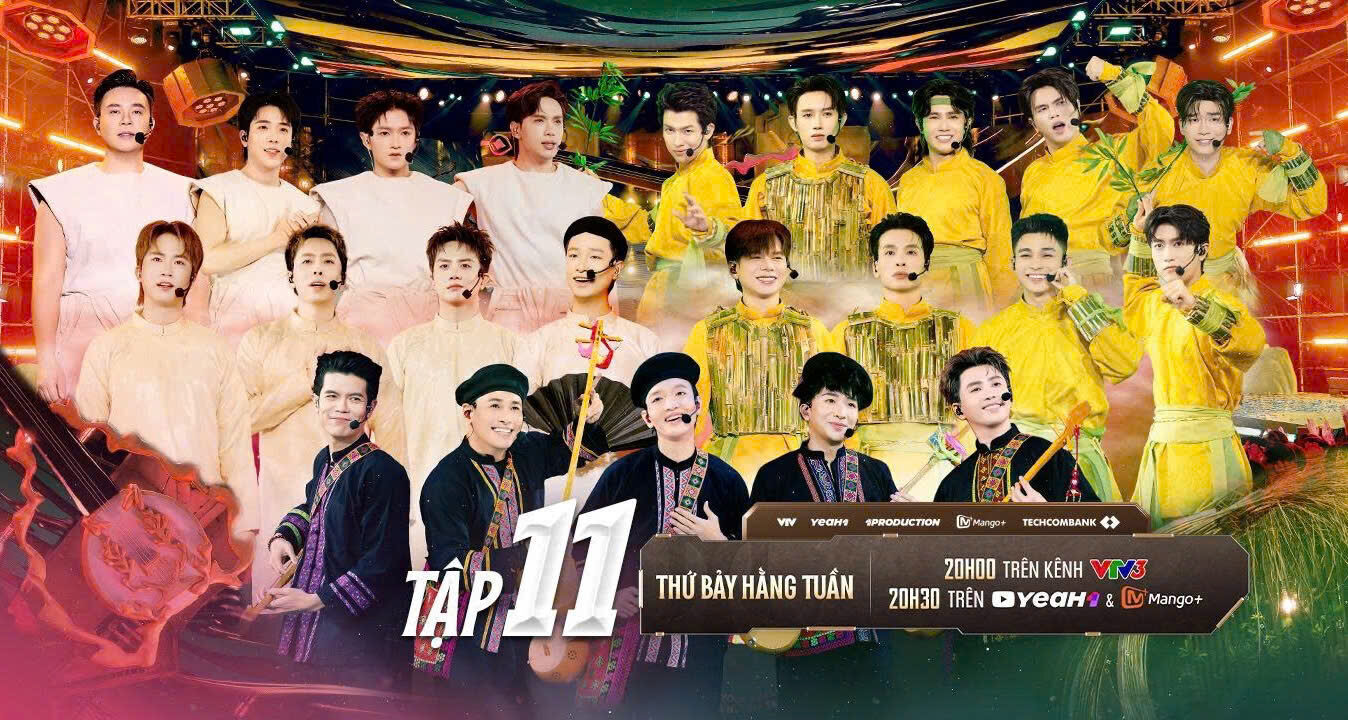
The Cultural Music Chapter: A Milestone Shaping Artistic Mindsets in Episode 11 of Anh Trai Vuot Ngan Chong Gai 2026
Continuing their journey, the Anh Tai delivered an explosive music feast, turning cultural heritage into contemporary hits.

Press
CONGRATULATIONS ON THE 20TH ANNIVERSARY OF YEAH1 GROUP'S ESTABLISHMENT (SEPTEMBER 12, 2006 – SEPTEMBER 12, 2026)
Twenty years, a journey written by the pioneering spirit, daring mindset, and continuous innovation of multiple generations of YeaH1 people.